
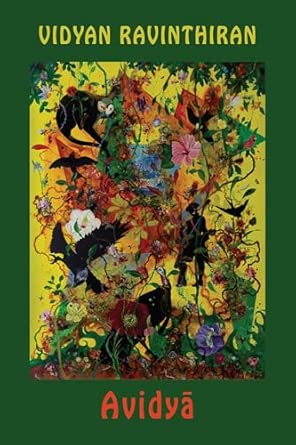
For the first time, in 2025 the Forward Prize for Poetry was jointly awarded. From an initial glance, Karen Solie’s Wellwater—which also won the 2025 T.S. Eliot Prize—and Vidyan Ravinthiran’s Vidya have little in common.
Wellwater charts the speaker’s memories of growing up in ?Edmonton, Canada, whilst also reckoning with the damage the anthropocene is wreaking on the world’s ecology.
Vidya speaks of migration from Sri Lanka to Britain (the speaker’s parents) and from Britain to the USA (the speaker, his wife, and child). It also tries to account for the horrific events of Sri Lanka’s long civil war.1
One way we could compare the texts is through nostalgic memory of place.
Nostalgia
Sedikides and Wildschut have recently argued that ‘nostalgia’—’a sentimental longing for one’s past’—helps us to ‘acculturate’ to a ‘host culture’. That can lead to immigrants, for instance, experiencing ‘heightened bicultural identity integration’ in their new home.2
Given the prevalence of memory in the nostalgic process, and the way that we sometimes regret for or feel ashamed about our past actions, I think we can extend nostalgia to ‘heightening bicultural identity integration’ with the past, too—the past, as the cliché goes, is just another country.
That is, the past is like a country we’re relocating to—a country in which we’re immigrants, perhaps only for a short time.
The past once lived
In Wellwater, Solie often evokes the past in an attempt to reveal experiences of her childhood. These poems also document traces of humans’ impact on the world’s ecology—this is the age of the anthropocene.
‘Bad Landscape’ begins with confusion, ‘I can’t make it right’, as the speaker is cast back to her childhood. The way it ends confirms the mix of the two themes of nostalgic memory and fears for the anthropocene:
Blue light
of the programs on our faces, some of the outside
was already on the inside, the radiation we were told
was everywhere—power lines, radios, fluorescent light, telephones—
in all of what emitted that low hum of menace
we had no other word for.3
The kids are watching tv, but the memory is stained by the ‘menace’ of the ambient sounds of twentieth-century technology—and the fear of radiation illness during the Cold War. That ‘we had no other word for’ this menace registers that there was something coldly scary about the sound.
It also restores to the present poem the sense of fear from the past. This nostalgia is painful.4

The past never lived
Ravinthiran’s Avidya—a Sanskrit word meaning ‘knowledge’ or ‘wisdom’—offers its own visitations to the past. Quite often, though, they are not the speaker’s past, but his parents’ past.
And these visitations also take place in another country. The double sense of ‘nostalgia’ is in play. In ‘Autumn’—a poem inspired by Romantic poet John Keats’s masterpiece ‘To Autumn’—the opening stanza testifies to the speaker’s strangeness from his family’s past, while trying to code it in a language he can understand.
This language includes contemporary references, but also the garb of a Romantic poet’s masterpiece:
The fallen yellow leaves now oftener
flare red. Embers. Blown-up chilli-flakes.
The burning of the library at Jaffna.
Foreign dead about to break
the spell of here and now. Phantasms steal
into the peaceful lives we seem to have earned,
telling tales about what happened
to them, not us, and in a tongue I never learned.
This is my garden, my spade of blood meal
and from our kitchen the time-travelling smell
of chicken curry floats to Walden Pond.5
Autumn is compared with the way the civil war led to a library being burnt down in Jaffna. This is also a present into which ‘Phantasms steal’. And the kitchen features a ‘time-travelling smell’: the past is in the present.
The speaker, in other words, is feeling nostalgic for a time and place they could not have lived, but which nonetheless affects their own lives. Marianne Hirsch would call this ‘post-memory’: how parents’ memories are recounted to children to the extent that children respond to the memories as if they lived them themselves.
The responses could include trauma responses.
I think a lot of Avidya‘s historical and geographical nostalgia is post-memorial—but that these post-memories allow the speaker to ‘acculturate’ themselves with the past and the country which he has only visited as a foreigner.
Poetic pain
It will come as no surprise to readers of poetry—whether the casual reader, the school-aged exam-taking reader, or the more expert, practised reader—that poetry is often a register of pain.
But that pain doesn’t have to suggest flight or fear.
In these poems—from different writers and vastly different socio-historical and socio-cultural backgrounds—the nostalgic pain is far from a regrettable past that gives an electric shock when accessed and touched emotionally.
Instead, the nostalgic pain provides a foundation of the speakers’ character or—in more philosophical terms—the speakers’ being. Living, that is, emerges from past pain.
- There has been an upsurge of success for stories about recent Sri Lankan history. Shehan Karunatilaka’s The Seven Moons of Maali Almeida won the 2022 Booker Prize, and V.V. Ganeshananthan’s Brotherless Night won the 2024 Women’s Prize for Fiction. ↩︎
- Constantina Sedikides and Tim Wildschut, ‘Nostalgia across cultures’, Journal of Pacific Rim Psychology, 16, 1–16 (10). ↩︎
- Karen Solie, Wellwater (Picador, 2025). ↩︎
- Etymologically, ‘nostalgia’ combines the Ancient Green works for homecoming—nostos—and pain—algos. See this article for a brief elaboration of this idea. ↩︎
- Vidyan Ravinthiran, Avidya (Bloodaxe, 2025). ↩︎
Leave a Reply
You must be logged in to post a comment.